Tuesday, January 17, 2012

Entertaining Angels Unawares: Hail the Conquering Hero


Be not forgetful to entertain strangers: 
for thereby some have entertained angels unawares.
- Hebrews 13:1-2

Our attitude toward our fighting men and women has fluctuated dramatically over the years. Since the first Gulf War we’ve freely given the respect, admiration, and honor rightly due our homecoming professional soldiers, despite whatever our feelings may be toward the conflicts they’ve willingly answered the call to participate in while leaving behind their homes and families. A generation earlier, troops returning from Vietnam were alternately ignored, spat on, or slandered to varying degrees for following orders and fighting what ultimately became an unpopular war.

During the Second World War, the GIs—“our boys”—constantly had their praises sung by the public and the media. Nearly an entire generation of men was called to duty, and they were the sons, uncles, fathers and cousins of nearly every one of us . . . so it was personal. As a result, Hollywood, though its intentions may very well have been honorable and the cause just, produced a lot of flag waving drivel to promote the war effort at home and on the fighting front, especially during the early years of the war.

Enter Preston Sturges who, along with John Huston, became one of the first screenwriters to make a successful transition to directing feature films in the sound era. Sturges, who is recognized as a genius of cinema comedy, with at least seven masterpieces of that genre to his credit in the 1940s, was too clever a character—and also a trifle too sardonic—to dally in the jingoism that was in vogue at the time. Nevertheless, he showed his admiration for, and paid his respects to, the American fighting man in no uncertain terms in Hail the Conquering Hero.  

Hail the Conquering Hero is a comedy, but it forgoes much of the slapstick visual humor that Sturges spread liberally across most of his other signature films, including The Lady Eve and Sullivan’s Travels, both from 1941. In its place Sturges, who really authored no visual cinematic style to speak of prior to Hero, utilizes crowded compositions of wall-to-wall people to match the snappy, inventive, wall-to-wall dialogue he was known for. The film moves along briskly, with abrupt, well-timed cuts, as he propels his plot nimbly forward. 

The professed hero is one Woodrow Lafayette Pershing Truesmith (Eddie Bracken, who also starred in Sturges’ brilliant The Miracle of Morgan's Creek), a chronic hay fever sufferer rejected by the Marines, who was born on the day—at the very moment in fact—that his genuine Marine hero father was killed at the Battle of Belleau Wood during World War I. Consequently, he’s had enormous shoes to fill his entire life, and can’t summon the nerve to return home to face his mother, his town, and the music (literally, as it turns out). To make matters worse, he’s written his mother that he’s a Marine, and has been fighting in the Pacific for the past year. 

But the real heroes of the film are six tapped-out, battle-hardened leathernecks fresh from Guadalcanal, who emerge from the mist on a city street and stop to bicker with one another outside the tavern in which Woodrow happens to be drowning his sorrows. Woodrow buys the Marines sandwiches and a couple of rounds of drinks, winning their respect by way of his fidelity to The Corps, and their sympathy by way of his unenviable position: an inability to make the grade in his perceived birthright branch of the service. During WWII, soldiers were routinely held up as examples of America’s finest, and it was the goal of every male from schoolboy to young adult to be one, or else suffer derision and raised eyebrows.

Through a series of well-intentioned ruses perpetuated by his new, uniformed buddies, Woodrow returns with them to his hometown a conquering, decorated hero. His long-suffering mother (who keeps a shrine to her late husband with his photograph prominently displayed), as well as his former girlfriend (who has become engaged to marry the hapless, buffoon son of the conniving, windbag mayor, wonderfully played by Sturges stock company favorite, Raymond Walburn) and the whole community welcome him at the train station with open arms and several marching bands. Things have clearly gotten out of control, and not only does the town pay off the mortgage on his mother’s home and propose a statue of him and his father, they ultimately nominate Woodrow as a candidate for mayor, solely on the basis of his military exploits, which in reality never happened.

None of this sits well with Woodrow, who tries tirelessly to tell the truth to anyone who’ll listen, but the entire town is swept away in a rapture of pride and patriotism, and is deaf to his exhortations. Even if they wanted to they wouldn’t get the chance to hear his side of the story, as Sergeant Heppelfinger (William Demarest), the leader of the small group of Marines, constantly adds to the tangled web, building on Woodrow’s legend at every turn.

It’s here that Sturges sets himself apart from the pack. He deftly yet nearly invisibly pokes fun at blind hero worship and even exploitation of the military, while at the same time paying tribute to our men in uniform who are willing to make the ultimate sacrifice on our behalf. And he fulfills in spades the number one requirement of a Hollywood movie in the heyday of the studio system: he entertains us. “Laugh and the world laughs with you, frown and you frown alone,” says a character in the film, echoing a line from Leo McCarey’s Going My Way, released earlier that same year (1944), and likely a mantra for those on the home front during World War II.

Thursday, December 1, 2011

The Rosetta Stone of Modern Holiday Music

Bing Crosby’s Merry Christmas album has been in print for over six decades (the title was switched to White Christmas a few years ago for its most recent CD incarnation), surviving several changes in format. 

It's a little annoying that, despite his monumental and pioneering achievements in the recording, film, and radio industries, Bing Crosby’s musical legacy has become more or less restricted to the genre of Christmas music, at least from the perspective of the general public. But let's face it, nobody does Christmas better than Bing. Admit it—the holidays just don't feel like the holidays unless you've heard Bing croon "White Christmas" at least once. The fact is, anyone who's ever recorded a secular Holiday song since World War II—from Perry Como and Johnny Mathis right up through Josh Groban and Michael Buble—owes a debt to Mr. Crosby. And it all began with the White Christmas album.

Actually, Merry Christmas was its original title, and it was first released in the form of a multiple 78-rpm record set in 1945, later making the transition to a box set of 45’s, then a 33 1/3-rpm LP (with four additional songs). It eventually became the very first million-selling Christmas album, and as recently as December 2010 the White Christmas CD topped Amazon.com’s Pop Vocal Holiday Music, Classic Broadway Vocalists, and Nostalgia Music charts simultaneously. What other album do you know of that has even been in print for over sixty-five years, let alone is still topping sales charts?

The album that started it all.

Bing's 1935 recording of "Silent Night" (his '47 version is included in this collection) was, in fact, the first Christmas record to become a huge hit. Ironically, Bing had been reluctant to record a religious song for the purpose of commercial gain, and he only agreed to do it if the proceeds went to a Catholic charity.

Irving Berlin's “White Christmas,” on the other hand, was not only the first secular holiday tune to do well on the charts, Bing’s rendition of it ultimately became the biggest selling record of all time*, and it opened the floodgates to a deluge of annual postwar Holiday recordings by major artists that continues to this day. The recording’s initial success was attributed to its striking a chord with homesick GI's in the sweltering Pacific Theatre of Operations during the Second World War, but that somehow spilled over onto the home front and continued long after the troops had returned. So much so that it cracked the Billboard pop charts an amazing twenty separate times over the ensuing couple of decades and reached the #1 position in three different years (1942, ’45, and ’46)!

* Current estimates have it at over 50 million units sold, and that number increases annually with a high volume of digital downloads during the holiday season.

Holiday novelty songs are still a part of our world, and “Christmas In Killarney” and “Mele Kalikimaka” have to be categorized as such—or are they an Irish tune and a Hawaiian tune, respectively? Either way, they're so darned warm and infectious one can't imagine this collection without them. Another one of my favorites is “It's Beginning To Look a Lot Like Christmas,” which unfailingly elicits an almost Pavlovian reaction of childlike anticipation of the Yuletide season every fall when it first wafts, post-Halloween, through the prematurely-decked malls.

For my money, "I'll Be Home For Christmas" is the real gem of this set. Could the troops stationed overseas have felt any less wistful upon hearing this breathtaking recording in the winter of 1943 than they had with “White Christmas” the year before? Bing's voice floats flawlessly, hauntingly, over the opening guitar strains as we're drawn, for a few fleeting moments suspended in time, into a pensive, somewhat melancholy realm…until being lulled gently back to our own time and place on the wings of an exquisitely sustained final note, a warm but mournful glow of remembrances of Christmases past lingering after. Maybe it’s a taste that’s acquired with age, but to me (while acknowledging the obvious sentimentality), this is pop artistry of the highest order, and the perfect marriage of singer and song. Anyone who only remembers the venerable Bing Crosby of the leisurely TV Christmas specials of the 1960s and ‘70s should give this performance a serious listen.

The 1955 LP, belatedly certified Gold by the RIAA in 1970.

There's a lot more to enjoy here, particularly Bing's workout with the inimitable Andrews Sisters on bandleader-arranger Vic Schoen’s jazzed-up version of “Jingle Bells” (recently ripped off, note for note, harmony for harmony, and pause for pause, by Barry Manilow), but I'll leave the rest for you to discover. Or rediscover, since these songs and carols are all practically a part of our collective unconscious. If they're not, or if you're too young to have heard this collection before—well, trust me, it's essential holiday listening. 

And it is, as they say, the perfect stocking stuffer.


© Jon Oye, 2011

Thursday, August 11, 2011

John Ford to be Honored Forever by USPS


John Ford's image will be the first to grace a "forever stamp" in a series commemorating great American film directors next year, according to the Los Angeles Times. Though the above likeness by the usually masterful Gary Kelley sadly falls a bit shy of its mark, it's appropriate that Fordthe finest of American auteurs, and the first recipient of AFI's Life Achievement Award, in 1973—is to be the first director honored. 

For you uninitiated, Ford 's body of work is a veritable must-see list of classics: How Green Was My Valley (Best Picture and Director Oscars, 1941), The SearchersThe Quiet Man (Best Director, 1952), My Darling ClementineYoung Mr. LincolnThe Man Who Shot Liberty ValanceThe Grapes of Wrath (Best Director, 1940), Fort ApacheShe Wore a Yellow RibbonRio GrandeThey Were ExpendableThe Informer (Best Director, 1935), to name a few of the most luminous, in no particular order. 

It would be well worth your time to Netflix any two or three of the above the next time a free weekend crops up. Though accessibility levels vary, all reward more richly with repeated viewings. You'll thank me someday. 


© Jon Oye, 2011

Friday, July 1, 2011

Walking the Line


       We were a family. How'd it break up and come apart, so that now we're turned 
       against each other? Each standing in the other's light. How'd we lose that good 
       that was given us? Let it slip away. Scattered it, careless. What's keepin' us from 
       reaching out, touching the glory? 
                                                                   - Pvt. Witt (in voice-over), The Thin Red Line

It’s difficult to do justice to the works of filmmaker Terrence Malick. How can one begin to describe in words, let alone analyze, what can only be grasped in a cinematic experience, and sometimes only fleetingly or partially at that? It would take a book to adequately explore all five of Malick’s films, each of which is as enigmatic as the J.D. Salinger-like director himself; if we limit ourselves to a more manageable number, like, say, one, then which one do we choose? Beginning with Days of Heaven, his second feature, up through The Tree of Life, all are of a piece, steps in the forward progression of Malick’s apparent search for the presence of God in nature, in the universe.

The sublime The Thin Red Line, unjustly overshadowed at the time of its release in 1998 (though nominated for the Best Picture Oscar) by Steven Spielberg’s war-film-by-the-numbers, Saving Private Ryan, released earlier that same year, finally received the home video treatment it richly deserved last year, courtesy of The Criterion Collection. So let’s go with that one.  

In the years since its release, The Thin Red Line has come to be considered one of the best War movies ever made, but it’s an injustice to pigeonhole it into any one genre. Malick deals in the profound, and in Red Line, as in Days of Heaven, The New World, and The Tree of Life, he reflects on the entry of sin—of the Cain slew Abel variety—into Eden, and the ensuing desecration and devastation. While showing many of the gritty, gruesomely disturbing realities of war, both mental and physical, he nevertheless detaches the viewer to a certain degree by employing a point of view that’s simultaneously omniscient and intensely personal. Screenwriter-director Malick, who studied philosophy at Harvard and Oxford, and taught it at MIT, allows us to hear the innermost thoughts of several individual characters while giving us a more serene overview of the whole, the Steinbeckian “one big soul,” and the indifferent but breathtakingly beautiful natural world in which it exists, as we hover over these men who are dealing the best they can with being in harm’s way. It recalls not so much John Ford’s They Were Expendable—another brilliant, fundamentally serene and reflective film about the sacrifices of war—as Wim Wenders’ Wings of Desire.  It is perhaps even more closely related to The Human Comedy, a World War II picture set on the American home front, which examines with a patient, empathetic, all-seeing eye the lives, deaths and longings of the people of a small town affected by the war. In it, as in Red Line, death is everywhere, and is ultimately embraced.

Malick has a distinct advantage over his precursors in spirit who worked within Hollywood’s studio system of old. Nowadays, independent-thinking directors are highly regarded in many circles, practically worshipped in others; “indies” have been given their own film festivals, even their own cable TV channel, which makes walking the thin green line between commercial success and art for art’s sake a relatively common occurrence. Not so back in the days of maverick auteurs like Ford, Orson Welles, and a few others, when original thinkers had to bring their visions to fruition within the confining structure of the system, packaging their art in the guise of entertainment, pleasing to not only bottom-line-eying executives, but to the lowest common denominator of the paying public. Directors, like actors, were under contract to the movie moguls, if they wanted to work at all, and they had to meet quotas stipulated therein.  

The notoriously reclusive Malick, by contrast, had made only two films in twenty-five years at the time of Red Line. Yet his reputation, based not only on the strength of those two transcendent works (Badlands and Days of Heaven), but nearly as much on his elusiveness, had Hollywood A-Listers lining up to work with him, even if it meant only a bit part. Nick Nolte, John Travolta, George Clooney, John Cusack, Sean Penn, and Woody Harrelson all appear in Red Line, willingly occupying widely varying amounts of screen time.  Penn reportedly told Malick, regarding his salary, “Give me a dollar and tell me where to show up.” Scenes with Martin Sheen (Badlands’ co-star, with Sissy Spacek), Bill Pullman, Billy Bob Thornton, Jason Patrick, Mickey Rourke, and Gary Oldman were cut from the finished film, while Leonardo DiCaprio, Matthew McConaughey, Kevin Costner, and Johnny Depp all either took part in readings, were auditioned, or met with the director to discuss prospective roles in Red Line.

James Caviezel in The Thin Red Line.

When all was said and done, relative unknowns Jim Caviezel and Ben Chaplin were given the lion’s share of substantive screen time, and their voice-overs—which provide the primary stream of consciousness the film navigates—are the most deeply compelling. Both actors were more than up to the task, and proved to be wise choices for their linchpin roles, as known entities’ celebrity likely would have distracted viewers. Nick Nolte, on the other hand, who was certainly a well-known star, utterly transcends his celebrity and gives the bravura performance of his life as an aging Colonel, passed over when more than a few promotions were handed out, who sees a victory at the Battle of Guadalcanal (the historic event which is the ostensible focal point of the film, and the James Jones novel on which it is based) as the opportunity of a lifetime, no matter how many lives it costs. 

Malick’s cache also earned him seeming carte blanche with producer Bobby Geisler, Pioneer Films, Phoenix Pictures, and 20th Century Fox, all eager to cash in on his magic touch as they backed his painstaking, laborious, and expensive process of researching and adapting a screenplay, and scouting locations in Central America and the South Pacific.

The importance of cinematography and music in Malick’s films is immeasurable, as they preside over most of the frequent interludes and passages that have no dialogue as completely as would a strong, fully realized main character. He utilized to full capacity the considerable talents of legendary directors of photography Nestor Almendros and Haskell Wexler in the stunning “magic hour” sequences of Days of Heaven. Lingering in the memory are such well-chosen music pieces as Carl Orff’s Musica Poetica, which features prominently in Badlands, and Camille Saint-Saëns’ “Aquarium,” from Carnival of the Animals, over Days of Heaven’s opening credits. The eminent composer Ennio Morricone provided the ethereal soundtrack music for Days of Heaven, with notable contributions from guitar virtuoso Leo KottkeRed Line features a mesmerizing score by Hans Zimmer and John Powell, as well as such borrowed pieces as Gabriel Fauré's celestial Requiem in Paradisum, Charles Ives The Unanswered Question,” and a beautiful Melanesian choral chant, God U Tekem Laef Blong Mi,” which perfectly complement the lush and atmospheric cinematography of John Toll, and eloquently serve Malick's statement to Zimmer that the soundtrack music must be part of “a river leading to a destination.” 


Malick remains an enigmatic but vital force in the film world. With his current release, The Tree of Life, he continues his quest through nature, via introspection, to touch the face of God. This time around he seems to have polarized critics and audiences alike. Just like Orson Welles did with Citizen Kane.  


© Jon Oye, 2011

Friday, May 27, 2011

Perfect Sounds


I’ve been an unabashed Beatles fan since I was twelve. To me, it’s simply a given that they were the single most prolific, creative, and deservedly popular musical entity of the past fifty-five years—the rock era. Their music and chemistry straddle generations—I can state from firsthand experience that my ‘tween and teen-aged kids love the Beatles’ songs and movies as much as I did when I was their ages, maybe more. The very first song my nine-year-old loaded onto his iPod was “Octopus’s Garden.”

Their eclectic range—particularly when one bears in mind the fact that their entire recorded output was produced in about a seven-year span—is staggering. From the buoyant, irresistible sound of their early period, through their more reflective and challenging middle years, to their final, experimental, more expansive phase, it’s almost impossible to make the blanket statement, “I don’t like the Beatles’ music.” There’s too wide a range of styles to not find at least one album—one song—that appeals to you. In fact, I tend to get a trifle defensive when people make claims of musical superiority regarding perceived challengers to the throne, like, say, the Rolling Stones or the Beach Boys. And I like the Rolling Stones—but, more or less (as Mick Jagger once described them) as a complement to the Fabs.

Not so much the Beach Boys. A few of their singles have resonated with me to varying degrees over the years, like “Help Me Rhonda,” “Good Vibrations,” the anthemic car song “I Get Around,” and its flipside, the transcendent “Don’t Worry Baby,” but for the most part I find their catalog singularly irritating.  The early “surfin’” tunes, which feature Mike Love at his fingernails scraping the chalkboard shrillest, “Fun Fun Fun,” Beach Boys’ Party, the obscenely over-played “California Girls,” that annoying, repetitive song from that annoying, obnoxious movie, Cocktail, all send tremors of nausea rumbling through me.

And yet, the Beach Boys made one of my favorite albums, Pet Sounds.

Oddly enough, I didn’t discover Pet Sounds until I was in my thirties. But immediately upon hearing it, some mystic chord of collective unconscious memory was struck, bringing forth a wave of inexplicable, bittersweet…call it nostalgia, for lack of a better word, a conduit back in time to my teenage years. Somehow, the genius of Brian Wilson, shut up in his room somewhere in California creating the preeminent musical expression of  ‘60s teenage angst, longing, love, and dreams, reached out across two and a half decades and moved me. 

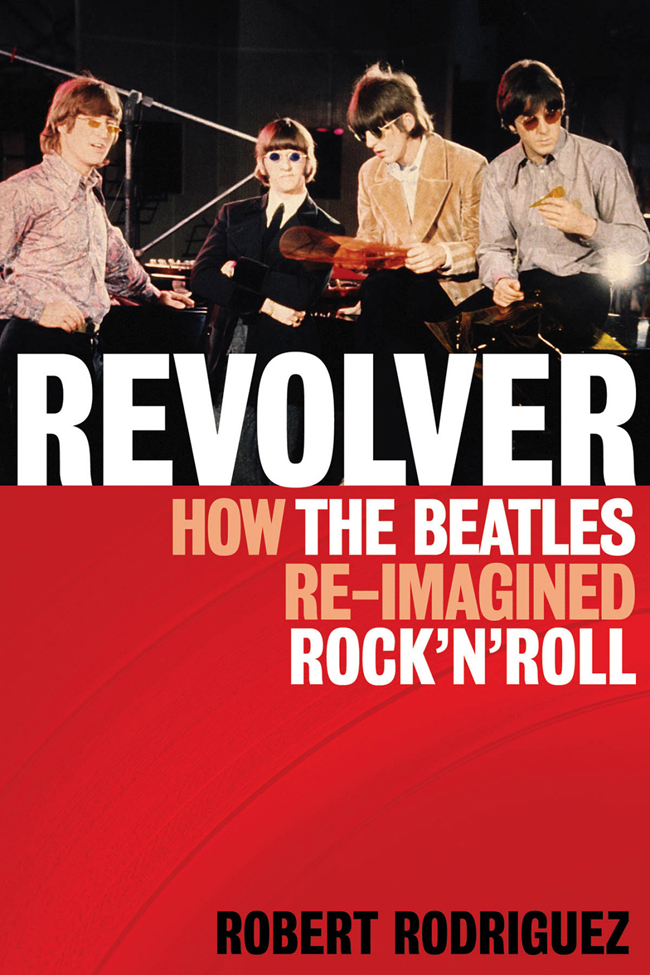
It doesn’t possess the scope of, or cut as wide a swath of sophistication as Rubber Soul (Wilson’s creative impetus for making Pet Sounds) or Revolver, the best back-to-back rock LP releases ever, but it is more focused and may very well be the finest pop album ever, encompassing all the youthful hopes and fears of the pre-psychedelic, more innocent early-to-mid 1960s—before they became The Sixties. It’s an inward-looking, male version of the Ronettes, taken to the next level.

Rock “groups”—which is what bands were called in the 1960s—all began life in search of a new “sound” that would attract the attention of DJ’s and the hearts and minds of a newly affluent generation of teenagers and adolescents who were growing up in the economically sound post-World War II era. Pet Sounds, like the best of everything the Beatles had to offer, sounded like nothing ever had before. It wasn’t a big hit by Beach Boys standards upon its initial release, reaching number 10 on Billboard’s album charts, but its very existence was enough to drive the creatively competitive Paul McCartney to drive the Beatles to produce Sgt. Pepper’s Lonely Hearts Club Band*, by consensus the ultimate ‘60s concept album. For me, it’s Pet Sounds.

* Paul would eventually pay tribute to his favorite album in 1971, in the "Long Haired Lady"/"The Back Seat of My Car" song sequence that closes Ram.

The mutual admiration society meets in 2002.

Strictly speaking of course, PS isn't really a Beach Boys album. It's Brian Wilson's vision, his sweat and toil, his baby, with an emphatic nod to the Wrecking Crew, Phil Spector's house band on all those classic Wall of Sound singles he produced in the early '60s, immediate ancestors of PS. Sadly, with the storied and agonizing demise of PS's follow-up, Smile, and Brian's ensuing drug-induced recession into near oblivion, the Boys became nothing more than a glorified oldies band, a shadow of which they remain to this day. 

Like most pop culture entities—movies, TV shows, songs, and LPsPet Sounds  is of its time. I’m sure older baby boomers who were in their teens when it was first released certainly have a stronger bond with it than I do (I was seven, and, as mentioned, was oblivious to it—though not to the Beatles, who were ubiquitous). Yet, like all entities which ultimately come to be considered classics, I imagine it continues to resonate with others who weren’t of that era, just as Casablanca and "Sing, Sing, Sing" do with many who weren't yet born when those American icons were released.

I’ll leave it to the experts and musicologists to dissect each song and examine its intricacies, subtleties, and influences (which has been done ad infinitum). The best I can do to champion Pet Sounds is merely attempt to relate the effect it has had, as a whole (and Pet Sounds must be swallowed whole), on me. Besides, I don’t want to destroy the magic, or the state of bliss that is summoned up when I listen to this masterpiece, by putting it under a microscope. 

For what it’s worth, Pet Sounds made the number two spot in Rolling Stone magazine’s 500 Greatest Albums of All Time in 2003. Number one? What else—Sgt. Pepper


© Jon Oye, 2011

Tuesday, May 10, 2011

Critical Massiveness: Gary Giddins’ Warning Shadows


     Gary Giddins is as close to a perfect critic as we’re likely to see in our time. His 
     style, at once easy and authoritative, is a seductive delight to read. He has an uncan-
     ny eye for detail—for the way films are shot and edited, for the subtle play of emot-
     ions on an actor’s face, for the way movies illuminate their moment and take their 
     place in history. His patiently arrived at judgments are witty, impeccable, and, to 
     my mind, indisputable. I’d rather read Giddins on the movies than go to most of 
     them.
                                                        — Richard Schickel, writer, filmmaker, and film critic

I’ve always been a bit in awe of critics. Not the garden variety simpletons who slap together off-the-cuff, minimally-informed, self-serving blather about an artist’s latest album or a glorified plot synopsis of a new film, but those who provide something deeper, who have studied and thoroughly understand what their subject is all about and how it applies to our world in a larger sense (if applicable), and present it in the form of memorable, inspiring prose. I’m sucked into the dizzying depths Tag Gallagher plumbs in his studies of John Ford and Leo McCarey. I’m entranced by Peter Bogdanovich’s movie blog. When I was younger, and (overly) enthusiastic about rock music, I would hang on every written word by the likes of Dave Marsh, Paul Nelson, and Greil Marcus, whether in Rolling Stone or Art Forum. Stranded: Rock And Roll For A Desert Island is still one of my favorite books.

At the top of the critical mass is Gary Giddins, who doesn’t only “get” jazz music, his area of well-proven expertise—he "gets" movies, too. After digesting only a few pages of his new collection of movie reviews (most of them from the recently defunct New York Sun), Warning Shadows: Home Alone With Classic Cinema, it becomes clear that he intimately comprehends, and has the uncanny ability to bring into focus for the reader, not only the bigger picture (which he does, breathtakingly, in the very first chapter—a stunningly astute overview of the full-circle journey of motion picture viewing since the turn of the last century), but also the diverse intricacies of genres and sub-genres, of film directors' entire oeuvres, of the basic, indefinable stuff that makes us love to watch movies, even when we're home alone.

Though best known as the long time jazz critic for the Village Voice and multiple award-winning author of several books on music (and one of the more memorable talking heads in Ken Burns' marathon documentary Jazz), Giddins revealed in an earlier anthology, Natural Selection, that prior to his gig at the Voice he was a movie reviewer, and it was a toss-up as to which direction he would opt to go in when the Greenwich paper beckoned. After a long career as the most respected jazz critic alive, it’s nice to see him spread the wealth of his erudition and come back to critiquing films. 


Actually, in Warning Shadows he focuses on DVD releases—more often than not, box sets and compilations, which provide him with the opportunity to delve into the works of time tested auteurs and much-appreciated actors and stars as well as overlooked geniuses and forgotten, would-be masterpieces. It’s both an enlightening experience and an enjoyable ride to partake of his knowledge, which is vast.

He adroitly notes, for instance, that Alfred Hitchcock has had the last laugh on his many biographers and critics by remaining the most durably popular studio-era film director in the English-speaking world, and he illuminates in two essays about the often misinterpreted and misunderstood John Ford more than some have managed in entire volumes. He makes the following observation, lost on so many, about Ford in his overview of Young Mr. Lincoln:

     (Ford’s) famously stubborn refusal to elucidate himself of his work or to admit that 
     what he did had anything to do with art honors the audience. Art implies intellect, 
     which is unequally distributed, and Ford demands emotion, which ruthlessly seeks 
     out the common denominator in us all. The implication is that if he has your heart, 
     your mind will follow, if only afterward as the justification for losing your emotional 
     grip.

Giddins writes in his piece on Noir-cum-Western-cum-Sixties Epic auteur Anthony Mann, "The 1950s were arguably the greatest years of the Western, the period in which generic formulas were at once sustained and destabilized through psychology, revisionism, high style and the kind of grandeur that follows when the most durable clichés are reframed against classical paradigms." In the same manner Giddins reinterprets much of what has come to be accepted (or dismissed) as cliché in classic cinema, and reframes individual films and entire bodies of work within fresh new evaluations that make you want to watch them.

Beneath the analytical surface, it's disarmingly obvious in every chapter that Giddins is an unabashed fan of cinema, and this fact, palpable in each line, makes the book an absolute joy to read, for the rest of us unabashed fans as well as the casual reader who may wish to learn more about the defining art form of the twentieth century and some of its most adept practitioners.


© Jon Oye, 2011